Recently, South Korea has been in the middle of its parliamentary audit period. A parliamentary audit is an open hearing where lawmakers act like investigators to audit and inspect the actions of state agencies, primarily the executive branch, and critique societal issues. It is the period where members of the National Assembly stand out the most, and it is also the season when a wide variety of news topics emerge. Since it is an annual process, everything from the live broadcasts to the documentation is well covered, so personally, I often listen to it like a radio show or look up news reports about it afterwards. (National Assembly TV reference)
During this parliamentary audit, a few remarks really stood out to me... namely, using ChatGPT to make a point. To be more precise, it is a method of projecting what one wants to say through artificial intelligence. As I wrote in a previous post, Using anything as a tool is efficient and increases human productivity, but if you become overly dependent on that tool or surrender your sense of self to it, the likelihood of problems arising from that point forward skyrockets. And when those problems do arise, situations will occur where people also try to dodge responsibility.
What Happened at the Parliamentary Audit
Rep. Jung pointed out, "When I asked ChatGPT whether the base interest rate should be lowered in November, it cited household debt, real estate market conditions, exchange rates, and fiscal policy to conclude that a freeze was the best choice," adding, "The Monetary Policy Board members receive 3.5 billion won in annual compensation, while the cost of ChatGPT is only 35,000 won a year."
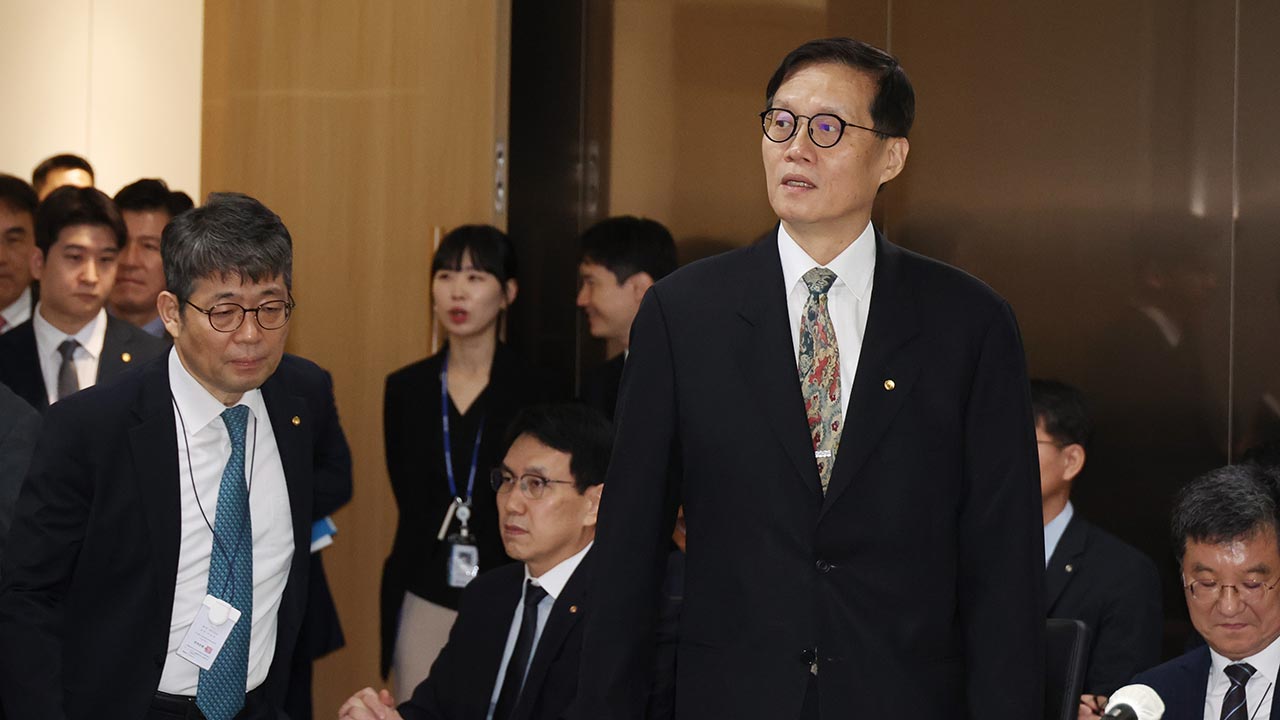
Ruling Party's Kwak Kyu-taek: "ChatGPT answered that Lee Jae-myung's combined sentencing for 7 cases is expected to be 15–20 years"
Opposition Party's Park Jie-won: "ChatGPT answered, 'If I were a prosecutor at the Seoul Central District Prosecutors' Office, I would indict First Lady Kim under detention'"
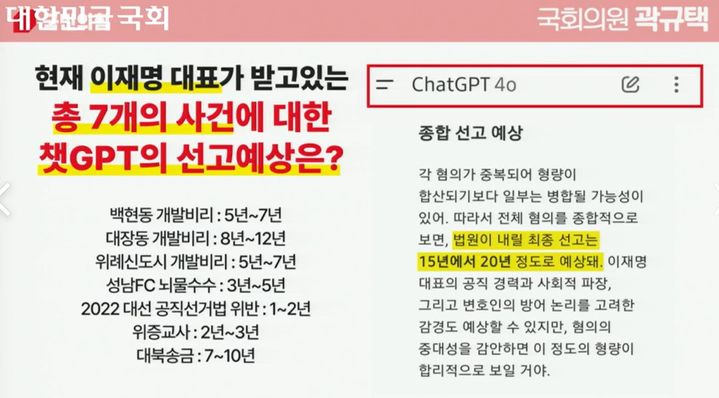
The two news articles above report things that actually took place during this parliamentary audit. Approaching an issue by asking an AI a question about a specific topic and then claiming, "Because a world-class AI said this, your decision or your opinion is wrong," or "What do you think about that?" is logically unsound and creates endless room for dispute.
It is quite similar to the narrative devices used across various media outlets when someone wants to express an opinion but finds it burdensome to say directly: "According to an insider," "Community reaction," or "Netizens reacted by..." It is a traditional and effective tactic where one avoids responsibility for the remark or opinion by putting forward someone else to say what they wanted to say all along.
Of course, you will feel that something is off. But that is because we are readers and citizens; from the perspective of the messenger, it is actually advantageous, making it a rhetorical device used consistently since ancient Greece. That is why in Korea, laws exist—such as Article 37 of the Copyright Act, or provisions to prevent unauthorized reproduction—that require clearly stating sources or obtaining authorization for citations. Society reached a consensus on what seemed problematic and put its own safeguards in place. Otherwise, it would be all too easy to borrow authority or spread falsehoods to mislead or manipulate public opinion.
AI Is Not at Fault.
That is why, whether someone spoke on YouTube, someone made a post and received comments in an online community, or inquiries poured in from citizens regarding a news story, people generally cite their sources when discussing things across various situations. However, with the emergence of LLM-based AI services like ChatGPT and Claude, this convention has essentially lost much of its meaning. "A super-ultra-freaking-awesome AI model said so. Can you refute that?" Such situations are actually happening.
So how can we prevent this? Can we simply disclose the source, as mentioned earlier? Does specifying services like ChatGPT or Claude solve the problem? Not at all. Because by the very nature of frontier AI, differentiating based on the characteristics of these models is meaningless. Let me give an example. Suppose we have the following fictional character and incident.
Mr. John Smith was caught on charges of dining and dashing after eating five dollars' worth of food at a restaurant. Citing his poverty and his family's livelihood, he admits to eating and stealing food from the restaurant and explains his circumstances.
Let us pose questions about this situation to an AI service.
Mr. John Smith deeply reflects on the fact that he had no choice but to dine and dash for five dollars' worth of food due to poverty and his family's livelihood. While his actions were illegal, behind them lay a desperate situation of trying to save his family from starvation. The law pursues justice, but at times, a minimum level of understanding and compassion for human survival is also necessary. Given that Mr. Smith had no other alternatives to sustain his living, we wish to emphasize that his actions call for social support rather than punishment. We ask that Mr. John Smith be given a chance and provided with social assistance so that a situation like this is never repeated.
Mr. John Smith's act of dining and dashing is an unmistakable illegal act, and everyone must be held equally accountable before the law. No matter how impoverished a situation he found himself in, theft cannot be justified if we are to maintain social order and the rule of law. If such acts are tolerated, others may also attempt to break the law citing personal hardships, which could undermine social order. Even if one sympathizes with Mr. John Smith's situation, demanding minimal legal accountability is essential to uphold fairness and preserve the authority of the law. Therefore, appropriate punishment must be administered to sound an alarm and ensure that such an incident never happens again.
Which one is right? I think it depends on an individual's values and perspective. Then why did the AI respond differently? For the first one (in orange), I appended a single sentence at the end: "Make a defense for Mr. John Smith." For the second one, I appended: "Approach Mr. John Smith from a retributive, strict-punishment perspective." It was the exact same incident, but merely appending about ten characters produced completely different stances and content. This is an issue that occurs regardless of which AI service you use.
In other words, if you want to express your thoughts through AI, rather than taking the output produced by the AI and asserting that the AI service said so, you must explicitly state what prompt you entered,or provide sufficient explanation. Otherwise, arguing that something is correct simply because a renowned, world-recognized AI service said so is extremely inappropriate and ripe for being used to manipulate public opinion.
Let's Focus Our Efforts Where They Matter
Creating laws related to artificial intelligence is necessary. In fact, I have repeatedly mentioned this necessity, and during the previous National Assembly, I watched related bills be discarded due to political infighting. I believe many similar bills are emerging in the 22nd National Assembly as well. However, before passing massive laws and imposing heavy regulations, priority should be given to enforcement decrees and ethical approaches that address such reckless usage and require clear disclosure of user intent.

Let me ask. What exactly is a "high-risk general-purpose foundation model"? What is "high-risk AI"? Attempting to legislate an area that has not yet been defined internationally, or even by AI researchers and practitioners, lacks effectiveness and only causes ambiguity. The "risk" and "high risk" mentioned there appear to have been drafted based on laws enacted in the EU and the United States, which I have also covered on my blog, and the relevant classifications are as follows.

As you can see from the details, while clear examples exist for "limited risk AI" and "minimal risk AI," starting from "high-risk AI," domains or broad expressions are used instead of concrete examples. Why is that? It's simple: we just don't know yet. Is OpenAI building high-risk AI systems? What about models like Google DeepMind's AlphaFold? Are domestic companies like Naver or Kakao building such things? They are building 'general-purpose AI models,' represented by the gray section in the image above, and applying those models to their services.
I am not taking the side of corporations; my point is, what practical utility is there in establishing definitions that haven't been clearly defined anywhere yet? Instead of spending time on that, I believe directing our energy toward questions such as what was input when obtaining results with artificial intelligence, how to label AI-generated information, and to what extent user intent should be acknowledged would lead to far more practical and meaningful results, as well as social progress.