There is an adage often quoted in international politics: "There are no permanent friends, no permanent enemies, only permanent interests." This realist maxim concisely captures the essence of international relations. Today, I would like to explore the meaning of this adage through two notable incidents in South Korea–U.S. relations.
The Reality Behind a Rock-Solid Alliance
South Korea and the United States have maintained such a close relationship for over 70 years that it has been termed a blood alliance. Yet, behind this steadfast alliance, an intelligence war driven by the pursuit of each nation's own interests has played out constantly. The Sue Mi Terry affair and the Suzi Park Thomson affair are prime examples that vividly illustrate this reality. In truth, the U.S. also engages in blatant wiretapping/eavesdropping or espionage against South Korea... but frankly, South Korea can do little more than lodge a formal protest. In 2023, when highly classified U.S. documents were leaked—in an incident so clumsy it's embarrassing to even call it hacking—it was directly and indirectly revealed that the U.S. was eavesdropping on multiple allies, including South Korea. Yet realistically, not much could be done about it. At most, expressions of regret were offered. (At the time, President Yoon Suk-yeol gave an interview phrasing it essentially as an expression of regret...)
The Suzi Park Thomson Affair: A Glimpse of Cold War ROK–U.S. Friction

In the mid-1970s, a figure named Suzi Park Thomson stood at the center of the 'Koreagate' scandal that shook the U.S. Congress. An aide to a U.S. congressman originally from South Korea, she was suspected of connecting South Korean intelligence officials with Congressman Robert Leggett, who was her romantic partner at the time.
This incident caused huge ripples because South Korea's Central Intelligence Agency (KCIA) had conducted covert lobbying during the Cold War to exert influence over the U.S. Congress. Representative Leggett was investigated by the FBI on suspicions of handing over classified secrets to the South Korean side, which ultimately brought his political career to an end.
The Sue Mi Terry Affair: Modern Intelligence Friction Between ROK and the U.S.

About 50 years later, in 2024, the Sue Mi Terry (Kim Su-mi) affair erupted. A Korean Peninsula expert who had served as a CIA analyst and a White House NSC aide, she continued to make statements on South Korea while working at think tanks after leaving public service. The U.S. Department of Justice arrested and indicted her, alleging that she worked for the South Korean government without registering as a foreign agent.
According to the indictment, Terry was accused of passing non-public U.S. information to South Korea's National Intelligence Service (NIS) and authoring media op-eds and giving interviews advocating South Korean government positions without following formal registration procedures. This serves as an example illustrating how the South Korean government maneuvered to shape public opinion and gather intelligence within its ally, the United States.
Similarities and Differences Between the Two Cases
Although the two affairs belong to different eras, they share several intriguing commonalities.
Category | Sue Mi Terry Affair (2020s) | Suzi Park Thomson Affair (1970s)
Figure | Sue Mi Terry (Kim Su-mi)
Korean-American North Korea expert
Former CIA analyst | Suzi Park Thomson
Korean-born U.S. House of Representatives aide
Allegations | Violation of the Foreign Agents Registration Act (FARA)
Unregistered lobbying and intelligence activities for the South Korean government | Suspicions of espionage and leaking classified information
Providing classified military intelligence to South Korean intelligence officers
Compensation | Luxury handbags, clothing, cash, etc., provided by the South Korean NIS | Building close ties with the South Korean government and intelligence agencies, exercising personal connections and influence
Outcome | Indicted by U.S. prosecutors in 2024, legal proceedings ongoing | No criminal punishment pursued, but led to Representative Leggett's political downfall
In both cases, individuals connected to South Korean intelligence agencies secretly exerted influence and attempted intelligence collection within the United States. This demonstrates the international political reality that "even allies conduct intelligence operations for their own national interests."
Intelligence Warfare Within an Alliance: "Friends Spy on Friends"
Why do even allies spy on one another? It boils down to the harsh reality of international politics. Because states pursue permanent interests, they operate under the assumption that situations can change at any time, even if they currently enjoy cooperative relations.
As the saying goes, "Friends spy on friends"—and in the world of intelligence, allies are no exception. Just as a former U.S. intelligence official remarked that "this is just a part of life," espionage among allies is simply a reality of international politics.
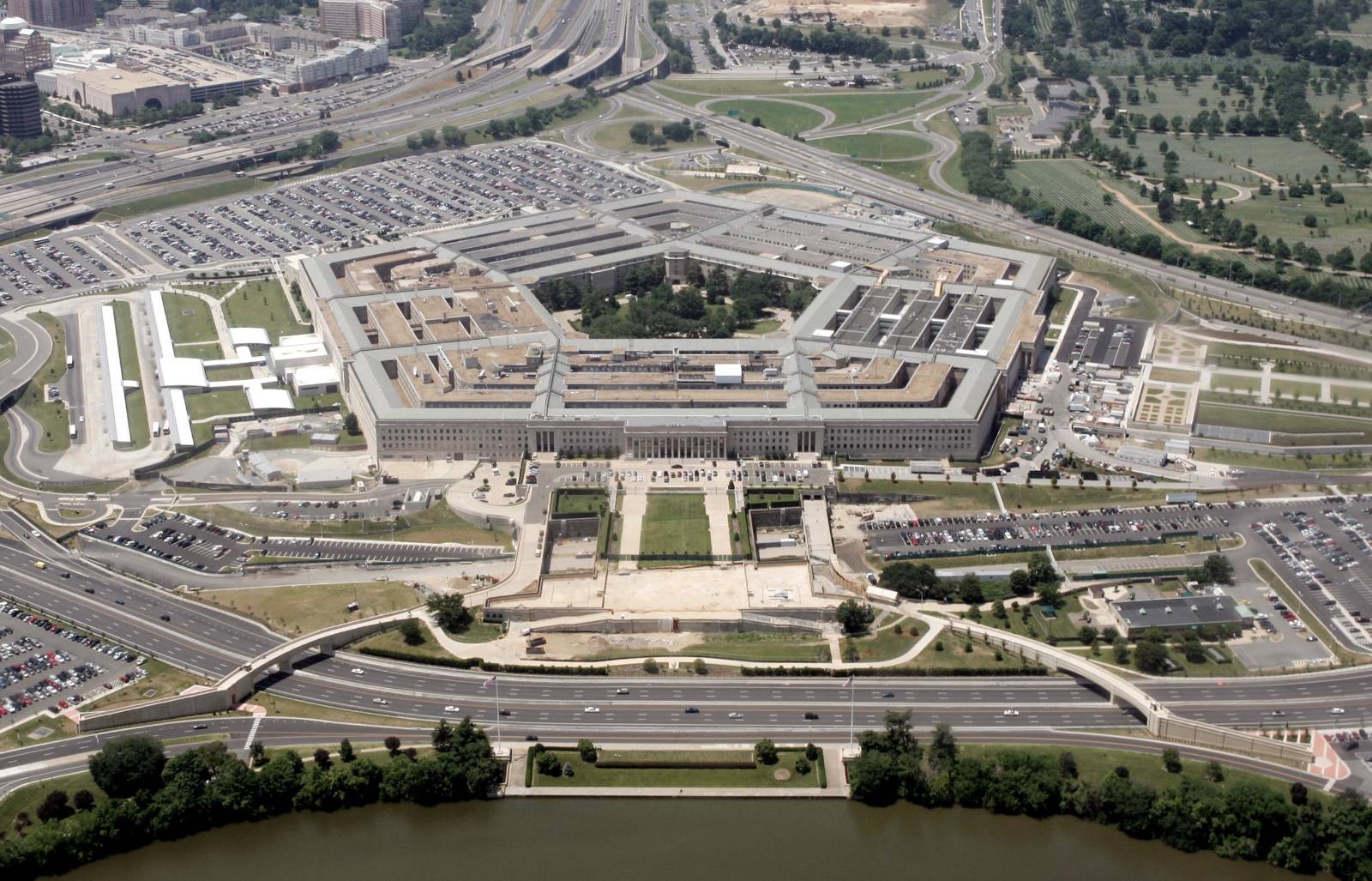
In April 2023, leaked classified Pentagon documents caused a shock by revealing that the United States had even eavesdropped on internal conversations inside South Korea's presidential office. According to the documents at the time, discussions by senior aides in the Yoon Suk-yeol administration regarding ammunition support for Ukraine were intercepted by U.S. intelligence authorities.
The Reality of International Politics: Interest-Driven Relationships
World history is filled with examples proving this adage. Germany and Japan, enemies during World War II, became allies of the United States and Western Europe after the war, whereas China and the Soviet Union (Russia), which had fought together as Allies, turned into adversaries of the West during the Cold War.
The shift in U.S.–China relations has been similarly dramatic. The two nations were allies against Japan during World War II, but after the 1949 communist takeover of China and through events like the Korean War, they became adversaries. President Nixon's visit to China and ping-pong diplomacy in the 1970s opened a period of temporary cooperation, but recently, neo-Cold War confrontations have deepened over trade and security tensions.
South Korea's Choices Amid Shifting Geopolitics
Amid an ever-shifting international landscape, South Korea's foreign and security strategy demands pragmatic wisdom. The phrase "there are no permanent allies and no permanent enemies" may sound cold, but by accepting it, we must leverage the alliance to maximize our national interests and security.
While safeguarding its security on the foundation of the South Korea–U.S. alliance, South Korea needs to exercise a sense of balance to minimize friction arising from inevitable areas such as intelligence warfare. At the same time, it is vital to steadily strengthen our sovereign intelligence capabilities and security capacity.
In an era of U.S.–China competition, multilateral diplomacy that maximizes national interests without leaning excessively toward one side is essential. While South Korea and the United States form an alliance sharing values and strategies, they must acknowledge the reality that each has its own domestic politics and national interest calculations, maintaining a pragmatic stance.
Pragmatic Diplomacy Centered on National Interest
In conclusion, the Sue Mi Terry and Suzi Park Thomson affairs demonstrate how vital interest is as a driving force in international relations. Both affairs are facets of friction that emerged as nations pursued their own interests within an alliance. While fulfilling its responsibilities as an ally, South Korea must uphold a pragmatic stance that openly asserts and negotiates for its own interests. When we do so, the alliance becomes healthier and the risks of intelligence warfare can be diminished.
It sounds nice on paper, but from South Korea's standpoint, really the only option is to be good at it without getting caught. Properly training so-called black operatives and cultivating local HUMINT assets are things every modern nation does. It isn't done exclusively against enemy nations; it is necessary just to safeguard against unknown risks or secure national interests. Personally, I found the book below to be a thoroughly entertaining read, and I highly recommend checking it out.
In the international community, South Korea must act as a reliable ally and a smart player, pursuing diplomacy that upholds principles while securing the national interest. Indeed, if you look at the sensitive country lists maintained by the U.S. NSC or the DOE (the Department of Energy, somewhat analogous to our Ministry of Trade, Industry and Energy) which oversees nuclear matters, you will see that U.S. allies such as Israel and Taiwan are included as well. They even include neighboring countries (since access via land routes, etc., is possible). In the international reality where there are neither permanent allies nor permanent enemies, South Korea will truly be able to guarantee its national survival and prosperity only when it proactively establishes strategy and maintains balance.